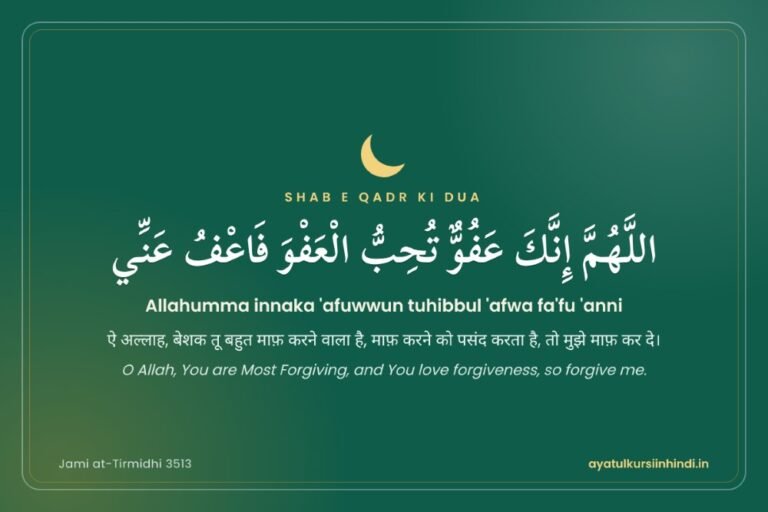
Attahiyat Dua In Namaz – attahiyat lillahi wa salawatu
Attahiyat, also called tashahhud, is the dua recited while sitting in the second and last rakat of every namaz. Its words were taught by the Prophet Muhammad ﷺ to his companions as carefully as a surah of the Quran. On this page you can read attahiyat in Arabic, Roman English, Hindi and Urdu with translation, along with the durood and the dua recited after it, the correct way to sit and raise the finger, and answers to common questions.
Attahiyat in Arabic
التَّحِيَّاتُ لِلَّهِ وَالصَّلَوَاتُ وَالطَّيِّبَاتُ، السَّلَامُ عَلَيْكَ أَيُّهَا النَّبِيُّ وَرَحْمَةُ اللَّهِ وَبَرَكَاتُهُ، السَّلَامُ عَلَيْنَا وَعَلَىٰ عِبَادِ اللَّهِ الصَّالِحِينَ، أَشْهَدُ أَنْ لَا إِلَٰهَ إِلَّا اللَّهُ وَأَشْهَدُ أَنَّ مُحَمَّدًا عَبْدُهُ وَرَسُولُهُ
Sahih al-Bukhari: 831; Sahih Muslim: 402
Attahiyat in Roman English
Attahiyyatu lillahi was-salawatu wat-tayyibat. As-salamu ‘alayka ayyuhan-nabiyyu wa rahmatullahi wa barakatuh. As-salamu ‘alayna wa ‘ala ‘ibadillahis-salihin. Ash-hadu an la ilaha illallahu wa ash-hadu anna Muhammadan ‘abduhu wa rasuluh.
Attahiyat Translation in English
All greetings, prayers and good things are for Allah. Peace be upon you, O Prophet, and the mercy of Allah and His blessings. Peace be upon us and upon the righteous servants of Allah. I bear witness that there is no god but Allah, and I bear witness that Muhammad is His servant and messenger.
Attahiyat in Hindi – अत्तहिय्यात हिंदी में
अत्तहिय्यातु लिल्लाहि वस्सलवातु वत्तय्यिबात। अस्सलामु अलैका अय्युहन्नबिय्यु व रहमतुल्लाहि व बरकातुह। अस्सलामु अलैना व अला इबादिल्लाहिस्सालिहीन। अश्हदु अन ला इलाहा इल्लल्लाहु व अश्हदु अन्ना मुहम्मदन अब्दुहू व रसूलुह।
हिंदी तर्जुमा: तमाम क़ौली, बदनी और माली इबादतें अल्लाह के लिए हैं। ऐ नबी, आप पर सलाम हो और अल्लाह की रहमत और उसकी बरकतें। हम पर भी सलाम हो और अल्लाह के नेक बंदों पर। मैं गवाही देता हूँ कि अल्लाह के सिवा कोई माबूद नहीं, और मैं गवाही देता हूँ कि मुहम्मद ﷺ उसके बंदे और रसूल हैं।
Attahiyat in Urdu – التحیات
تمام قولی، بدنی اور مالی عبادتیں اللہ کے لیے ہیں۔ اے نبی! آپ پر سلام ہو اور اللہ کی رحمت اور اس کی برکتیں۔ ہم پر بھی سلام ہو اور اللہ کے نیک بندوں پر۔ میں گواہی دیتا ہوں کہ اللہ کے سوا کوئی معبود نہیں، اور میں گواہی دیتا ہوں کہ محمد ﷺ اس کے بندے اور رسول ہیں۔
Attahiyat Image
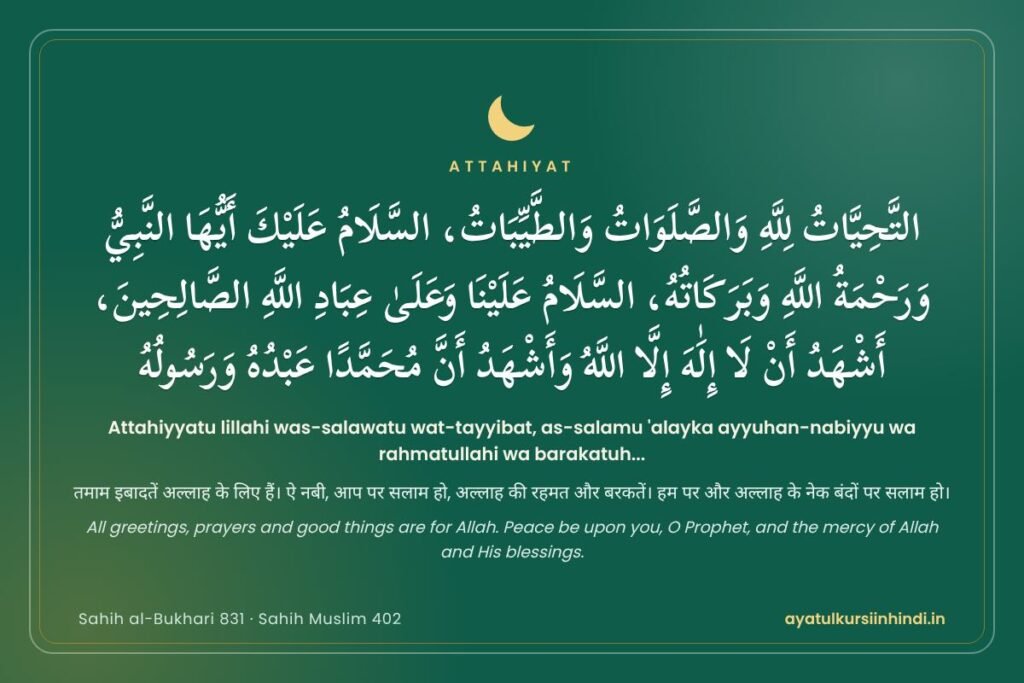

Attahiyat With Urdu Translation Image

Attahiyat Video
Listen to the correct pronunciation of attahiyat and read along with the text above.
Attahiyat in Hadith
Abdullah ibn Mas’ud (may Allah be pleased with him) said: the Messenger of Allah ﷺ taught me the tashahhud, with my hand between his hands, the way he would teach me a surah of the Quran. (Sahih al-Bukhari: 6265; Sahih Muslim: 402) The wording above is from this narration of Ibn Mas’ud, which is the one followed in the Hanafi school. The narration of Ibn Abbas, used in the Shafi’i school, has slightly different words with the same meaning. (Sahih Muslim: 403)
What to Recite After Attahiyat
In the last sitting of the prayer, after attahiyat, recite the durood and then a dua before the salam.
Durood e Ibrahim
اللَّهُمَّ صَلِّ عَلَىٰ مُحَمَّدٍ وَعَلَىٰ آلِ مُحَمَّدٍ كَمَا صَلَّيْتَ عَلَىٰ إِبْرَاهِيمَ وَعَلَىٰ آلِ إِبْرَاهِيمَ إِنَّكَ حَمِيدٌ مَجِيدٌ، اللَّهُمَّ بَارِكْ عَلَىٰ مُحَمَّدٍ وَعَلَىٰ آلِ مُحَمَّدٍ كَمَا بَارَكْتَ عَلَىٰ إِبْرَاهِيمَ وَعَلَىٰ آلِ إِبْرَاهِيمَ إِنَّكَ حَمِيدٌ مَجِيدٌ
Roman English: Allahumma salli ‘ala Muhammadin wa ‘ala ali Muhammad, kama sallayta ‘ala Ibrahima wa ‘ala ali Ibrahim, innaka hamidum majid. Allahumma barik ‘ala Muhammadin wa ‘ala ali Muhammad, kama barakta ‘ala Ibrahima wa ‘ala ali Ibrahim, innaka hamidum majid. (Sahih al-Bukhari: 3370)
Dua e Masura
After the durood, recite a dua from the Quran or hadith. Read it on our Dua e Masura page.
Attahiyat Ka Tarika (How to Recite Attahiyat in Namaz)
- Sit after the second sajdah of the second rakat. Men sit on the left foot with the right foot upright; women sit as is comfortable according to their school.
- Place the hands on the thighs near the knees, fingers together.
- Recite attahiyat quietly, so that only you can hear.
- Raise the index finger of the right hand when you reach “la ilaha” and lower it at “illallah”, or keep it raised until the end of the sitting, according to your school. This is the shahadah finger, pointing to the oneness of Allah.
- In the second rakat of a 3 or 4 rakat prayer, stand up after attahiyat without reciting the durood.
- In the last rakat, continue with durood e Ibrahim and dua e masura, then say salam to the right and then to the left.
Ruling of Attahiyat
In the Hanafi school, sitting for attahiyat in the last rakat is fard, and reciting it is wajib; the first sitting in a 3 or 4 rakat prayer is also wajib, so if it is forgotten, sajdah sahw is made. In the Shafi’i and Hanbali schools the final tashahhud and durood are pillars of the prayer. In the Maliki school the tashahhud is Sunnah. Ask a scholar of your school about what to do if it is missed.
Frequently Asked Questions
Why is attahiyat recited in namaz?
Because the Prophet ﷺ taught it and recited it in every prayer. Its words are greetings to Allah, salam on the Prophet ﷺ and on the righteous, and the declaration of faith, so every prayer ends with the shahadah.
What if I forget attahiyat in the second rakat?
In the Hanafi school, if you stand up fully and remember later, complete the prayer and make sajdah sahw before the salam. If you remember before standing fully, sit back and recite it.
Is attahiyat recited in every rakat?
No. It is recited only in the sitting after the second rakat and in the last sitting. In a 2 rakat prayer there is only one sitting, and both attahiyat and durood are recited in it.
Can I recite attahiyat in Hindi or Roman English?
In namaz it must be recited in Arabic. Use the Hindi and Roman text to learn the words, and read the translation to understand them.
Which finger is raised in attahiyat?
The index finger of the right hand, called the shahadah finger. The other fingers are closed, and the thumb rests against the middle finger in the Hanafi method.